Leave Your Message
- Phone
- E-mail
- Whatsapp

- Wechat

Pvc Granules are kind of everywhere in manufacturing, honestly. You'll find them in rigid pipes, window profiles, flexible cables, flooring, even coated fabrics. By 2026, it doesn't make much sense to rank them as best overall — what matters is what you're actually trying to make. Rigid granules are all about holding their shape and staying dimensionally stable, while flexible grades get plasticizers added in to make them softer and more bendy. You know, it’s not just about the basics. There are formulations that are clear, colored, cable-friendly, and weather-resistant—each one handles a specific production need. And honestly, the details are what make the difference.
Take cable compounds, for instance—they need solid insulation and consistent extrusion. Transparent grades, on the other hand, have to keep haze and unwanted color in check. If you're comparing products purely on price, these differences are pretty easy to overlook. But they matter: they affect processing, appearance, and how long the product lasts. So what should buyers actually look at when choosing Pvc Granules? This guide walks through the main types, their typical uses, and the key properties worth comparing—hardness, thermal stability, color consistency, and processing behavior. So here's the thing — product names don't always tell the whole story. You really need to ask suppliers for the latest technical data, safety info, and maybe a few representative samples. Then, test that material on your own equipment. Because results can shift depending on additives, machine settings, and what you're actually running. Even a grade that looks perfectly labeled might behave differently once it hits your production line. That's worth a closer look, don't you think?
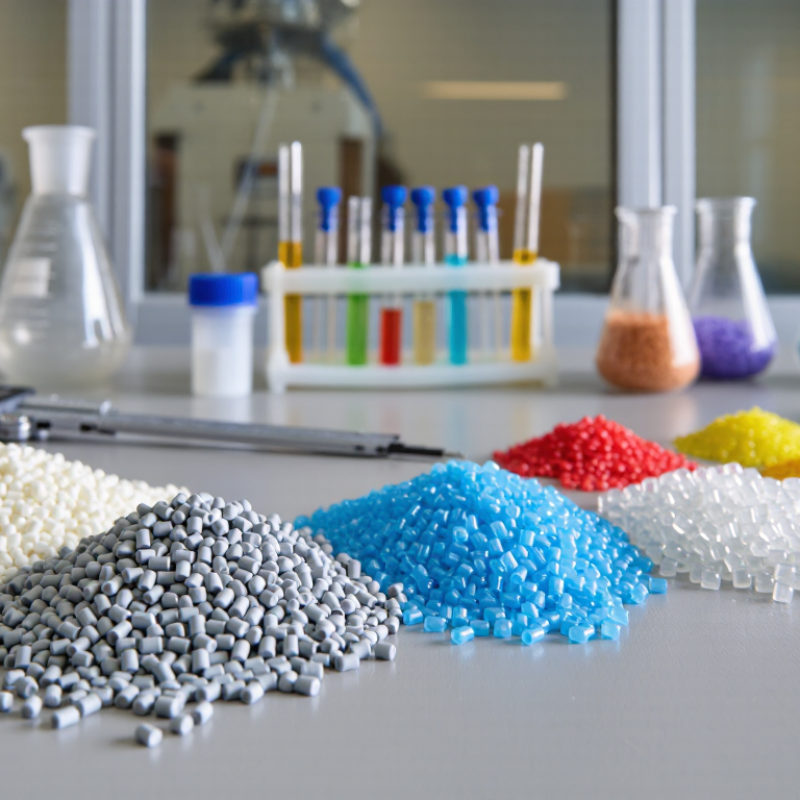
PVC granules are classified by formulation and the performance they deliver after molding. Rigid grades contain little or no plasticizer, helping parts retain their shape in profiles, fittings, and housings. Flexible grades use plasticizers to create softer materials for cable jackets, tubing, and seals. Small changes matter. Heat stabilizers help limit degradation during processing, while lubricants support smoother flow through the extruder.
Other formulation choices affect appearance and durability. Fillers can reduce cost or adjust stiffness, but excessive loading may weaken a part or dull its surface. Pigments provide color; carefully selected additives help preserve clarity in Transparent Pvc Granules. These clear grades typically need compatible ingredients and controlled processing to avoid haze, bubbles, or yellowing. Clear does not always mean flawless.
Performance should be matched to the finished product, not judged by appearance alone. Useful checks include hardness, tensile strength, impact resistance, and heat stability. For outdoor or warm environments, ask for relevant weathering or thermal test data. In practice, a grade that runs well on one machine may behave differently on another. That detail is easy to overlook. Batch consistency and real processing trials can reveal problems that a product sheet cannot.
| PVC Granule Type | Typical Formulation | Key Performance Characteristics | Common Applications |
|---|---|---|---|
| Rigid PVC (uPVC) | PVC resin with heat stabilizers, processing aids, impact modifiers, and pigments as needed; formulated without plasticizer or with only a very low level. | Hard, dimensionally stable, and resistant to moisture and many chemicals. Generally maintains its shape under normal service conditions but is less flexible than plasticized PVC. | Pipe and fittings, profiles, conduit, building components, and rigid panels. |
| FlexiblE Pvc | PVC resin blended with plasticizers, stabilizers, lubricants, and optional fillers or pigments. Plasticizer type and loading determine softness. | Flexible and bendable, with hardness and low-temperature behavior tailored to the application. Formulations vary in abrasion, oil, and weathering resistance. | Hose, flexible tubing, flooring, seals, footwear components, and protective coverings. |
| Soft Cable-Grade PVC | Plasticized Pvc Compound with stabilizers and additives selected for electrical, thermal, and processing requirements. | Provides electrical insulation and flexibility. Heat resistance, flame behavior, and cold flexibility depend on the specific compound and applicable test requirements. | Wire and cable insulation, sheathing, and low-voltage cable components. |
| Transparent PVC | Clear-grade PVC resin with carefully selected stabilizers and processing aids; pigments and opacity-producing fillers are minimized or omitted. | Can provide good clarity and flexibility or rigidity depending on the plasticizer content. Clarity and color stability depend on processing and formulation. | Clear tubing, protective covers, packaging components, and transparent sheets. |
| Impact-Modified Rigid PVC | Rigid PVC formulation incorporating impact modifiers, alongside stabilizers and processing aids. | Improved resistance to impact and brittle failure compared with an otherwise similar unmodified rigid formulation; exact performance depends on temperature and test method. | Profiles, fittings, housings, and rigid parts exposed to handling or mechanical impact. |
| Weather-Resistant PVC | PVC compound with stabilizers and, where suitable, UV-protective pigments or additives; may be rigid or flexible. | Formulated to reduce degradation from outdoor exposure. Long-term color and property retention depend on the formulation, processing, and climate. | Outdoor profiles, exterior building components, cable sheathing, and exposed flexible products. |
| Heat-Stabilized PVC | PVC resin with a heat-stabilizer system selected for the processing method and intended service conditions. | Improved resistance to heat-related degradation during processing and, where specified, during use. It is not inherently suitable for every high-temperature application. | Extruded profiles, pipe, cable compounds, and molded components requiring controlled thermal stability. |
| Flame-Retardant PVC | PVC compound with a formulation designed to meet defined flame-performance requirements; additives and plasticizers are selected for the target use. | PVC is inherently less readily ignited than many common polymers, but flame performance varies by compound, thickness, and test method. Compliance must be confirmed by testing. | Building products, cable components, electrical enclosures, and other applications with specified fire-performance requirements. |
| Medical-Use PVC | Specially controlled PVC formulation, often plasticized for flexibility, with material selection and manufacturing controls matched to the intended medical application. | May be formulated for clarity, flexibility, and compatibility with defined sterilization or contact conditions. Suitability depends on regulatory requirements and application-specific validation. | Selected medical tubing, fluid-handling components, and medical bags where permitted by applicable regulations. |
| Foamed PVC | PVC compound containing a physical or chemical foaming system, plus stabilizers and processing aids suited to the selected foaming process. | Cellular structure reduces weight compared with a solid product of similar dimensions. Density, surface finish, and mechanical properties vary with the foam structure. | Foamed sheets, lightweight panels, profiles, and selected interior or display components. |
Formulation and performance ranges vary by resin, additives, processing method, product geometry, and applicable test standard. Confirm suitability using supplier technical data and application-specific testing.
Check density, impact strength, heat stability, and dimensional consistency. Pipe and profile grades are not always interchangeable. A thick pipe and a narrow window section can behave differently.
Extruder settings, dies, and cooling lines affect the finished product. Record melt conditions, surface finish, and rejected-product rates during sampling. Paper specifications are not the whole story.
Insulation compounds need reliable electrical performance, flexibility, and conductor coverage. Sheathing compounds often need more abrasion resistance and toughness. The cable’s intended use matters.
Look for rough patches, uneven thickness, or color changes. These may signal processing issues, but they do not reveal the cause by themselves. Temperature and formulation both matter.
Check clarity at the intended product thickness. Additives and processing temperature can affect the result. Even slight overheating may cause haze or a yellow cast.
Good pigment dispersion helps reduce streaks and uneven color. Compare samples under the lighting where customers will see the product. Showroom lighting can be misleading.
No. A softer compound may bend more easily, but softness alone does not prove quality. Too much flexibility may affect mechanical performance or long-term stability.
Review technical data for electrical properties, tensile strength, aging, hardness, and processing conditions. Then test the material on the actual line. I would not rely on one sample alone.
Define acceptable color limits and check more than one batch. Some shades may shift slightly. A visual check helps, but it can miss brittleness or processing problems.
Pvc Granules are available in several formulations, each designed to balance properties such as rigidity, flexibility, clarity, color, durability, and processing performance. Rigid grades are commonly suited to pipes, profiles, and building products, while flexible grades serve applications such as hoses, flooring, and consumer goods. Cable-grade materials are formulated for insulation and sheathing, and transparent or colored options help meet the appearance requirements of finished products.
Specialty PVC granules can be tailored for medical, automotive, or outdoor applications, where particular combinations of performance and environmental resistance may be needed. Choosing the right type starts with the product’s intended use: consider its required strength or flexibility, exposure conditions, appearance, processing method, and relevant performance specifications. Matching the formulation to these needs can help manufacturers select a suitable material for both product function and production goals.