Leave Your Message
0%

Choosing the right Travel Urine Bag Film isn’t just about grabbing any film off the shelf — it’s a real packaging decision. You want a film that can handle leaks, keep odors in check, and be easy to carry around. Plus, it needs to be safe for the patient. And let’s not forget, it should tolerate folding, temperature swings, and all the bouncing around inside luggage or medical kits.

According to Grand View Research’s Urinary Drainage Bags Market report, there’s a growing demand for portable drainage solutions, not only in hospitals but also for home care and travel-related healthcare. Meanwhile, Smithers’ The Future of Medical Device Packaging to 2028 highlights the importance of barrier performance, seal quality, and good material traceability. All these reports show one key truth: a thin film may cut down on weight, but if the seal isn’t reliable, it ups the risk of leaks or contamination. So, the cheapest roll isn’t always the safest bet.

Packaging expert Dr. Laura Bennett points out, “You’ve got to look at how the Film Performs in the entire environment it’s used in, not just how thick it is.” That’s a really good tip when comparing different materials like polyethylene, multilayer laminates, or co-extruded films. When shopping around, it’s wise to check out tensile strength, puncture resistance, how well it seals with heat, transparency, and whether it’s compatible with urine contact. Following ISO 11607 standards can also help make sure your packaging is up to snuff—especially for sterile or protective medical setups.

Details do count. A dependable film should seal smoothly around curves, stay flexible after cold storage, and shouldn’t turn cloudy, get brittle, or become noisy during travel. And honestly, testing is critical. What passes in the lab might not perform the same in real-world use. That gap between theory and reality is something you definitely want to watch out for.

For buyers around the world, it’s a good idea to ask for technical data sheets, migration info, batch records, and even samples before making a decision. The experience of your supplier also matters. A well-made Travel Urine Bag Film needs to balance protection, comfort, ease of manufacturing, and responsible material choices. Perfect solutions? Rare. But making decisions based on solid evidence? Totally achievable.
How to Choose Travel Urine Bag Film for Global Buyers?

What Is Travel Urine Bag Film and Why Does Material Choice Matter?

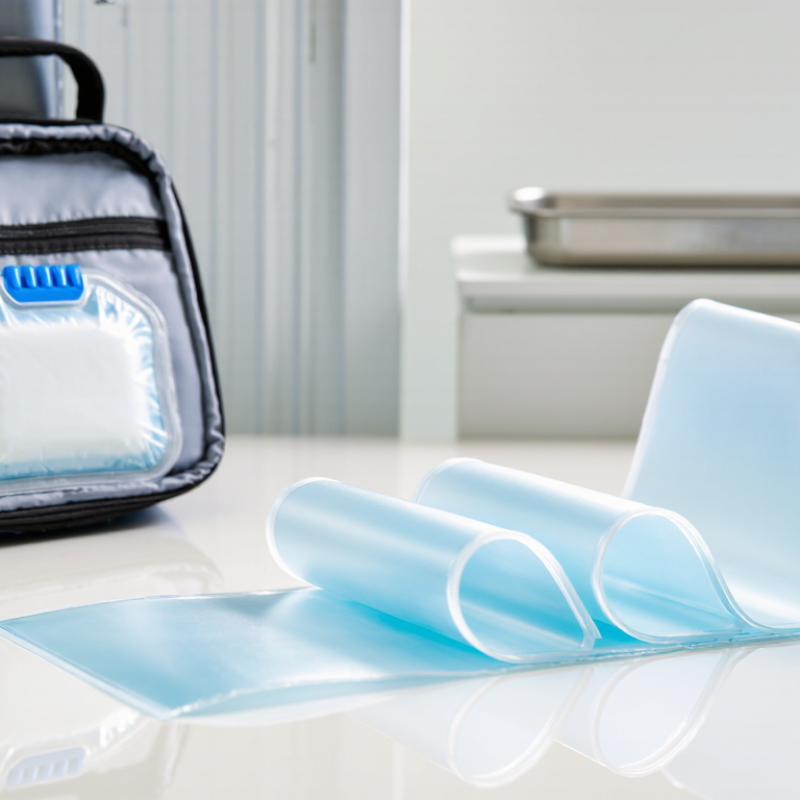
Travel urine bag filmis the Flexible Plastic layer used to make portable urine collection bags. It forms the bag body, supports heat-sealed edges, and helps contain liquid during movement. Common structures use medical-grade polyethylene, polypropylene, or multilayer films. Each material behaves differently under pressure, folding, temperature changes, and sealing.

Material choice matters because a travel bag may sit in luggage, a vehicle, or a hospital room. The film should resist punctures from zippers and sharp package corners. It should also remain flexible without becoming brittle in cold conditions. A reliable seal is essential. Even strong film can fail when sealing temperature, pressure, or time is poorly controlled. That detail is often underestimated.

I usually examine thickness, tensile strength, elongation, seal strength, transparency, and odor performance. A clear film looks reassuring, but appearance proves little. Ask for test data, production samples, and lot traceability. The film should suit its intended contact, storage period, and disposal process. Suppliers should provide evidence of biocompatibility evaluation where applicable. Global buyers also need documentation aligned with the destination market’s medical-device requirements. Do not choose the thickest film automatically. It may add weight, reduce flexibility, and increase cost. A thinner structure can work well, but only after realistic leakage and transport testing. One overlooked issue is handling noise. Very stiff film may protect the bag, yet feel inconvenient during travel.

Which Film Properties Define Safety, Strength, and Leak Resistance?

How to Choose Travel Urine Bag Film for Global Buyers?

Film selection defines whether a travel urine bag feels secure or becomes a source of anxiety. In practical procurement reviews, safety starts with controlled raw materials and consistent thickness. Medical-use PVC should have suitable plasticizer compatibility and low extractable levels. It should also remain flexible during cold transport. A brittle film can crack around folded edges. It happens more easily than many buyers expect.

Strength depends on more than thickness. A thick film may still fail if the sealing temperature is poorly controlled. Check tensile strength, elongation, puncture resistance, and weld performance together. The seam should survive bending, pulling, and repeated handling. Transparent film helps users spot discoloration, particles, or unusual fluid levels. Clarity matters. So does odor.

Leak resistance needs practical testing, not only supplier statements. Request filled-bag tests, pressure testing, drop testing, and aging data. Examine the drain connection and corner seals carefully. These areas often receive less attention, yet they face repeated stress. Buyers comparing Pvc Travel Feeding Bag Film should confirm whether the material is actually intended for urine collection applications. The wording can be confusing. Ask for material specifications, test methods, production records, and samples from several batches. One sample proves very little. A small weakness may remain invisible until the bag is squeezed inside luggage.

How Do Different Film Materials Compare for Urine Bag Manufacturing?

How to Choose Travel Urine Bag Film for Global Buyers?

Film material affects comfort, sealing, clarity, and storage performance. PVC remains common because it is flexible, transparent, and easy to heat-seal. However, buyers should check plasticizer selection, odor, and long-term flexibility. Medical-grade TPU offers strong puncture resistance and a softer feel. It also performs well in demanding transport conditions. Its higher cost may affect large-volume projects. PE-based films can provide chemical resistance and economical production, but they may feel stiffer and look less clear. EVA blends can improve softness, although their sealing behavior requires careful validation.

No film is perfect. A low-cost option may appear attractive during sampling, yet fail after folding, aging, or repeated handling. Practical evaluation should include seal strength, drop testing, leakage testing, transparency, and compatibility with urine-contact conditions. Review technical data, traceability records, and biocompatibility evidence from qualified suppliers. Regional requirements can differ, so local regulatory review remains essential.

Tips: Compare films using the same thickness and bag design. Test samples after heat aging and cold storage. Check whether printing, tubing, and connector sealing affect the film. Ask for lot consistency data, not only one successful sample. Small details matter. Also, avoid choosing from price alone; a cheaper film can create higher inspection and rejection costs later.

What Regulatory Standards Should Global Buyers Check Before Purchasing?

Global buyers should treat travel urine bag film as a medical-device component, not ordinary plastic packaging. The finished device classification may differ by market. Confirm the intended use, patient contact, and sales region before requesting quotations. A Luxury Urine Bag Film label does not replace regulatory evidence.

Ask suppliers for a technical file, material specifications, and change-control records. Check ISO 13485 certification for the manufacturing quality system. Request biocompatibility evidence based on ISO 10993, especially for skin or prolonged contact. Chemical characterization and extractables data can reveal risks hidden behind a clean appearance. Also review ISO 11607 when the film forms sterile packaging. Sterilization compatibility matters.

Do not rely on one certificate.

For the United States, verify the applicable FDA pathway and registration duties for the finished product. For Europe, check Medical Device Regulation requirements, conformity assessment, labeling, and authorized-representative arrangements where applicable. Other regions may require local registration, import documentation, or language-specific instructions. Confirm film thickness, seal strength, puncture resistance, odor control, and storage stability through test reports. A clear sample should remain flexible after transport and temperature changes. Request lot traceability and a written complaint process. One weakness in this approach is assuming paper compliance predicts bedside performance. It does not. Test the actual bag assembly, including welded seams and the drainage outlet, before approval.

How Can Buyers Evaluate Suppliers, Samples, and Quality Control Systems?

Choosing travel urine bag film requires more than comparing price and thickness. Buyers should examine supplier experience, production records, and responses to technical questions. A reliable supplier can explain resin selection, film structure, sealing performance, and storage conditions. Ask for traceable batch information and recent quality reports. Durable Pvc Urine Bag Film should remain flexible during folding, resist leakage, and support consistent heat sealing. Small details matter.

Tips: Request samples from different production batches. Check thickness at several points, not only the center. Bend the film around a rounded edge and inspect whitening, pinholes, or cracking. Test sealed seams after storage and handling. Ask whether inspection equipment is calibrated. A polished sample may hide process variation.

Supplier audits should review clean working areas, incoming-material checks, and final inspection records. Useful controls include visual inspection, dimensional testing, tensile testing, and leak testing. Buyers should also confirm how nonconforming rolls are isolated. One weak point is often overlooked: sample approval does not guarantee mass-production consistency. Recheck the first production lot. Keep written acceptance criteria, even when communication feels easy. Mistakes happen. A second review can prevent expensive surprises.

How to Choose Travel Urine Bag Film for Global Buyers? - How Can Buyers Evaluate Suppliers, Samples, and Quality Control Systems?
Evaluation Category Evaluation Dimension What Buyers Should Check Recommended Evidence or Test Practical Purchasing Benchmark Weight
Supplier Qualification Quality management system Confirm whether the supplier operates a documented quality system covering purchasing, production, inspection, nonconformity control, corrective action, training, and traceability. Request a valid ISO 13485 certificate when the product is supplied as a medical device or medical-device component. Verify the certificate scope, site address, validity, and issuing body. A current certificate with a scope relevant to medical bags, plastic film, or related sterile/non-sterile products. 10%
Supplier Qualification Regulatory and market support Evaluate the supplier’s ability to provide technical files, material declarations, change notifications, test reports, and documentation required for the destination market. Review a document checklist aligned with the intended market, product classification, labeling requirements, and importer obligations. Do not rely on a certificate without checking its exact scope. Complete, consistent documentation with controlled revision numbers and defined document ownership. 8%
Material Selection Film polymer and construction Identify the polymer type, additives, colorants, adhesive layers, thickness of each layer, and whether the structure is mono-layer or multilayer. Request a signed material specification, technical data sheet, layer-structure drawing, and certificate of analysis for representative lots. The material structure is clearly defined, repeatable, and compatible with urine contact, intended storage conditions, sealing, and disposal requirements. 10%
Material Safety Biocompatibility and chemical safety Assess risks from direct or indirect skin contact, urine contact, pigments, plasticizers, adhesives, residual solvents, and extractable substances. Use a product-specific biological evaluation based on ISO 10993 principles where applicable. Request chemical characterization, restricted-substance declarations, and extractables/leachables information when risk assessment requires it. No unexplained restricted substances, unacceptable odor, visible contamination, or inconsistent chemical composition. 12%
Film Performance Thickness uniformity Check average thickness and variation across the web, roll, and finished bag. Uneven thickness can affect strength, sealing, transparency, and leakage resistance. Use calibrated thickness gauges or micrometers. Define a sampling map covering the machine direction and transverse direction. The agreed tolerance is stated in the product specification and is demonstrated consistently across multiple production lots. 8%
Film Performance Tensile and elongation properties Compare tensile strength and elongation in both machine and transverse directions, especially after forming, sealing, and simulated transport. Test according to a recognized method such as ISO 527 or ASTM D882, using the film thickness and specimen direction stated in the report. Results meet the approved specification in both directions, with no brittle failure, pinching, or unacceptable loss after conditioning. 10%
Film Performance Puncture and tear resistance Evaluate resistance to puncture from handling, sharp edges, folded items, and pressure during travel. Check whether a small tear propagates rapidly. Use an agreed puncture or tear method, such as ASTM D1709 or ASTM D1004 where suitable, and test the finished bag rather than film alone when possible. No leakage or uncontrolled tear propagation during simulated handling and load testing. 10%
Sealing Quality Seal strength and seal window Check seal strength at nominal settings and at process limits. Review seal width, channel formation, wrinkles, contamination, and peel behavior. Use ASTM F88/F88M or another agreed seal-strength method. Establish minimum seal strength, sealing temperature, dwell time, pressure, and acceptable failure mode. The process has a defined operating window and seals remain intact after filling, compression, aging, and transport simulation. 12%
Leak Prevention Finished-bag leak integrity Inspect the complete bag, including seals, corners, ports, closures, valves, and connection points. Film-only testing cannot verify the finished product. Use an appropriate pressure-decay, immersion, dye-penetration, or bubble-emission method. ASTM F1929 and ASTM F2096 may be relevant for specific porous or nonporous packaging applications. Zero leakage in the approved sample and production-lot acceptance plan at the defined test pressure, duration, and sample size. 14%
Usability Flexibility, handling, and noise Evaluate folding, opening, filling, emptying, carrying, and storage in a travel environment. Check for excessive stiffness, blocking, crinkling, or film-to-film adhesion. Conduct a documented user trial with representative users and the intended closure or accessory system. Record failure modes instead of relying only on subjective comments. The bag opens reliably, remains stable during use, and does not interfere with the intended closure or disposal procedure. 6%
Odor and Appearance Visual cleanliness and odor Inspect transparency, color, haze, gels, black specks, foreign particles, wrinkles, fish-eyes, delamination, and abnormal odor. Define visual inspection lighting, distance, background, defect limits, and odor evaluation conditions. Retain approved visual standards. No visible foreign matter, open defects, delamination, abnormal odor, or appearance outside the approved reference sample. 5%
Environmental Resistance Temperature, humidity, and aging stability Consider the expected storage and transport range, including heat, cold, humidity, prolonged folding, and exposure to cleaning agents or disinfectants if applicable. Perform conditioning and accelerated-aging studies based on the intended shelf life and risk assessment. Recheck tensile strength, seal strength, leakage, odor, and appearance after conditioning. Critical performance remains within specification after the defined conditioning and aging program. 8%
Sample Evaluation Sample representativeness Determine whether samples were made on normal production equipment using the proposed material, process parameters, tooling, and closure components. Ask for sample lot number, production date, machine identification, material batch, process settings, and whether the sample is commercial production or laboratory-made. At least three samples from a normal production lot, plus additional samples from separate lots before approval. 7%
Quality Control Incoming material control Review controls for resin, additives, adhesive, printing ink, closures, and other purchased components. Check approved supplier lists, incoming inspection records, certificate-of-analysis review, identification testing, quarantine status, and batch traceability. Materials are released only after documented verification against approved specifications. 7%
Quality Control In-process monitoring Check controls for film thickness, temperature, pressure, speed, sealing parameters, cleanliness, web tension, and visual defects. Review process-control plans, calibrated equipment records, operator inspection forms, alarm limits, and reaction plans for out-of-control conditions. Critical parameters have defined limits, monitoring frequency, responsible personnel, and documented corrective actions. 8%
Quality Control Final inspection and release Verify that the final release decision covers dimensions, appearance, seal integrity, leakage, packaging, labeling, quantity, and traceability. Request the final inspection specification, sampling plan, acceptance criteria, batch release record, and retained-sample procedure. Every shipment can be linked to raw-material lots, production records, inspection results, and an authorized release decision. 10%
Quality Control Statistical sampling and defect classification Check whether critical, major, and minor defects are defined separately and whether the sampling plan is appropriate for the risk. Review the applicable AQL or risk-based sampling plan, defect photographs, escalation rules, and historical nonconformity data. Critical defects have zero-acceptance expectations or an equivalent risk-based control, while major and minor limits are explicitly documented. 7%
Change Control Material and process change notification Assess how the supplier controls changes to resin grade, additive package, film structure, tooling, production location, sealing process, sterilization method, or packaging. Request the change-control procedure, notification period, requalification rules, and examples of change impact assessments. No material or process change is implemented without documented risk assessment, approval, and customer notification when required. 8%
Supply Continuity Capacity, lead time, and traceability Review production capacity, minimum order quantity, standard lead time, safety-stock options, backup equipment, and continuity planning. Request capacity statements, production calendars, business-continuity plans, and examples of lot traceability from raw material to shipment. The supplier can support forecast changes and maintain consistent quality without substituting materials or sites without approval. 5%
Commercial Review Total cost of ownership Compare film price together with scrap rate, inspection cost, failure risk, packaging, freight, tooling, testing, and regulatory documentation. Use a landed-cost model based on consistent film thickness, bag dimensions, order quantity, payment terms, logistics route, and expected yield. The selected supplier offers the best verified value, not merely the lowest unit price. 5%
Important: The benchmarks above are practical buyer-side evaluation criteria rather than universal product specifications. Final acceptance limits should be agreed in a controlled product specification, validated against the intended use, and confirmed through risk assessment and applicable regulations in the destination market.

Which Cost, Packaging, and Shipping Factors Affect the Final Decision?

For global buyers, selecting urine bag film is not only a material decision. Cost, packaging, and shipping can change the final purchase value. Pvc Embossed Urine Bag Film may support better handling and controlled appearance, but its price depends on thickness, embossing depth, roll width, and production tolerance. Cheaper is tempting. However, unstable thickness can cause sealing problems and higher waste during bag conversion.

Packaging also affects total cost. Rolls should include moisture protection, clean inner wrapping, clear labels, and strong outer cartons. Export packaging must protect the film from dust, pressure, and temperature changes. Ask for roll length, net weight, carton dimensions, and pallet details before placing an order. Small data gaps create large surprises. A supplier’s sample may look excellent, while bulk packaging feels less practical.

Shipping decisions require more than comparing freight quotations. Calculate volumetric weight, container utilization, loading limits, insurance, and destination handling charges. Flat-packed rolls may reduce damage, but they can occupy more space. Consolidated shipping may lower freight costs, yet it can extend delivery time. Request production lead time, packing photos, inspection records, and a realistic shipping schedule. One weakness remains: buyers sometimes focus on unit price and ignore rejected rolls, storage fees, or delayed production. A complete comparison should include these risks, not only the invoice total.

How to Choose Travel Urine Bag Film for Global Buyers?

Indicative landed-cost allocation for a standard international procurement scenario. Product cost, packaging efficiency, shipping, and compliance requirements should be evaluated together before selecting the film supplier and delivery method.

How to read the chart: Film material is usually the largest cost component, while packaging and shipping can significantly change the final landed price. Buyers should compare film thickness, roll yield, carton utilization, minimum order quantity, freight mode, destination duties, and required medical-device documentation.

FAQS

What is travel urine bag film?

It is the flexible plastic layer forming a portable urine collection bag. It supports heat-sealed edges and contains liquid during movement. Common structures include polyethylene, polypropylene, and multilayer films.

Why does material choice matter?

The bag may travel inside luggage, a vehicle, or a care room. The film should resist zippers, sharp corners, folding, and pressure. It must remain flexible in cold conditions. Small material differences can matter.

Which film properties should buyers examine?

Review thickness, tensile strength, elongation, seal strength, transparency, and odor performance. Test puncture resistance around seams and drainage outlets. Do not choose the thickest film automatically. Thicker film may add weight and reduce flexibility.

How can buyers test film samples?

Measure thickness at several points, not only the center. Bend the film around a rounded edge. Look for whitening, pinholes, and cracks. Seal samples, then test them after storage and handling.

What sealing factors affect leakage?

Heat-sealing temperature, pressure, and time must work together. A strong film can still fail with poor sealing control. Test welded seams on the complete bag assembly. This detail is easy to underestimate.

What documents should global buyers request?

Request material specifications, technical files, test reports, and batch traceability records. Review biocompatibility evidence when contact conditions require it. Check chemical characterization and extractables information where appropriate. Do not rely on one certificate.

Which regulatory areas require attention?

Confirm the finished device classification in each sales region. Review quality-system certification and applicable medical-device requirements. Check labeling, local registration, import documents, and language needs. Sterile products also require suitable packaging and sterilization evidence.

How can buyers evaluate supplier quality control?

Ask about incoming-material checks, calibrated equipment, and final inspection records. Review visual, dimensional, tensile, and leak-testing procedures. Confirm how nonconforming rolls are isolated. A polished sample can hide production variation.

Does sample approval guarantee mass-production consistency?

No. Recheck the first production lot against written acceptance criteria. Request samples from different batches when possible. Compare seam strength, thickness, flexibility, and leakage performance. Paperwork helps, but real testing remains necessary.

Conclusion

Choosing the right Travel Urine Bag Film is essential for producing safe, durable, and reliable urine collection bags used during travel and daily care. Buyers should evaluate film thickness, flexibility, transparency, seal strength, puncture resistance, odor control, and barrier performance, as these properties directly affect comfort, leak prevention, and product stability. Common material options should be compared according to their suitability for medical use, processing requirements, and performance under different temperatures and storage conditions.

Global buyers should also confirm that the material and finished products meet applicable regulatory and safety standards in their target markets. A dependable supplier should provide clear technical data, consistent samples, traceable raw materials, documented quality-control procedures, and reliable testing records. In addition, buyers need to consider minimum order quantities, customization options, packaging protection, transportation conditions, lead times, and total landed cost. A balanced evaluation of safety, performance, compliance, supply reliability, and pricing can support a confident purchasing decision.
Amara

Amara

Amara is a dedicated marketing professional at Jiangsu Dahai Plastics Co., Ltd., a company rooted in the production of high-quality PVC films since its establishment in 1996. With a deep understanding of the industry and a passion for innovative plastic solutions, Amara plays a crucial role in......
Previous Why Choose PVC Film Roll for Global Packaging Needs?
Next Top 10 Travel Urine Bag Film Types for Global Buyers?